Summary: Facial recognition technology (FRT) has become an increasingly valuable tool in modern video surveillance because it helps identify suspects, locate missing persons, and improve public safety more quickly than traditional camera systems alone. Using examples such as the 2025 New Orleans inmate escape and Dubai’s AI-powered surveillance network, the article highlights how FRT can support law enforcement and security operations.
In May 2025, ten inmates escaped from a local detention facility near New Orleans. Within minutes of the alert going out, a nonprofit-run facial recognition network called Project NOLA identified two of the escapees in the French Quarter, and both were captured quickly. Earlier that year, the same camera network helped police confirm that a New Year’s Day vehicle attack in the French Quarter was carried out by a single suspect, allowing them to avoid triggering a wider panic. “This system works,” Project NOLA’s founder told local reporters. “And when it’s paused, we lose time. And sometimes, that can mean losing lives” (Metropolitan Crime Commission).
Facial recognition has also proven its worth well beyond street-level policing. In the Middle East, Dubai Police’s “Oyoon” system, which links over 5,000 AI-powered cameras across the city’s transport hubs, tourist sites, and streets to facial recognition and behavior analysis, helped officers arrest 319 wanted suspects in 2018 alone (Oxford Institute of Technology and Justice).
These are the stories that make the case for facial recognition technology (FRT): crimes interrupted, victims found, harm avoided. But the same incidents that demonstrate its value also explain why the technology generates so much public unease. A system powerful enough to identify an escaped inmate in a crowd is also powerful enough to track an ordinary person’s every public movement. Treating security and privacy as opposing forces, where one inevitably loses ground for the other to win, is a common trap businesses deploying facial recognition need to avoid. The real design challenge is building a single system where both hold their ground.
Why Facial Recognition Has Become Essential
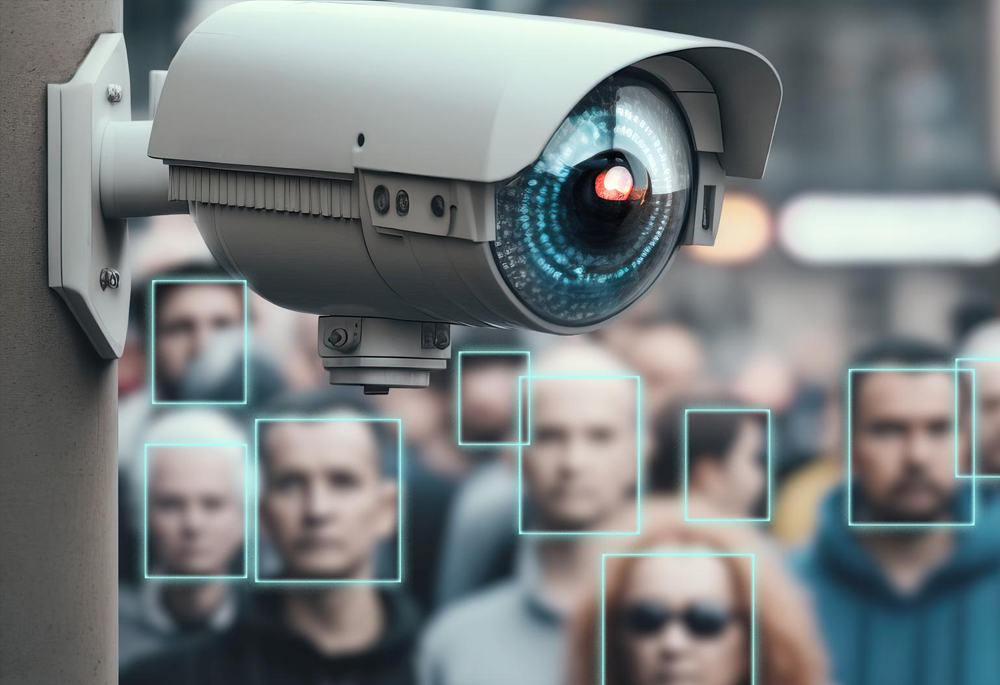
Video surveillance has existed for decades, but cameras alone only record what happened after the fact. Facial recognition turns passive footage into an active identification tool, and that changes what a camera can do for a business, for a few concrete reasons.
Speed of response. Matching a face against a watchlist or database happens in seconds, not hours. In time-sensitive situations, such as a missing person, an active threat, or a fraud attempt in progress, that speed is often the difference between prevention and cleanup.
Scale. A human security guard can recognize a few hundred faces reliably. A facial recognition system can screen against databases of millions, continuously, without fatigue. This is part of why the global facial recognition market is projected to grow at nearly 9% a year between 2025 and 2030, reaching a market volume of roughly USD 8.4 billion by 2030, as more sectors beyond law enforcement adopt it for access control, fraud prevention, and identity verification (Statista).
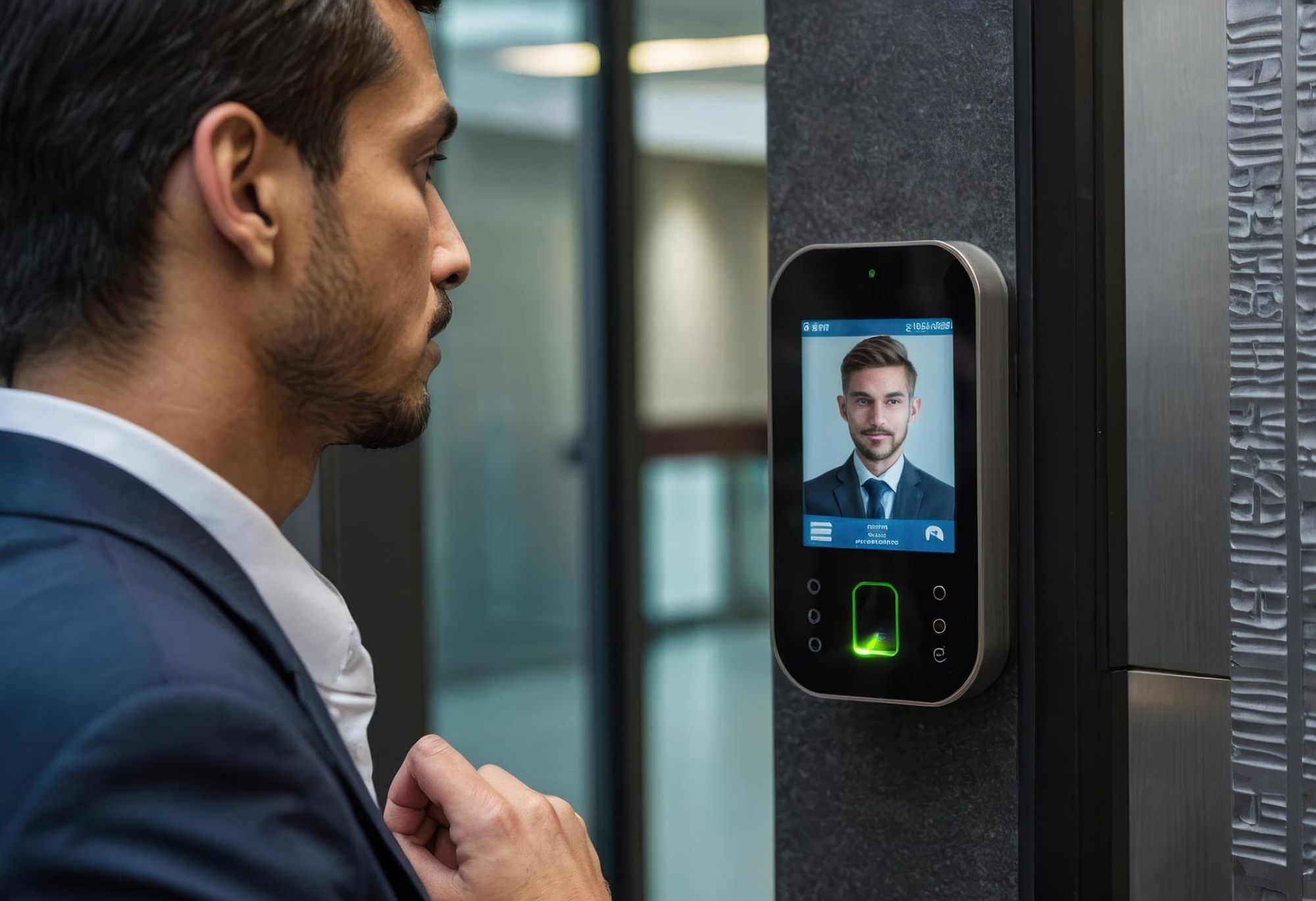
Fraud and identity assurance. Facial recognition is growing into the backbone of authentication and authorization, confirming that the person opening an account, accessing a facility, or completing a transaction is who they claim to be, and catching impersonation and account takeover attempts that purely document-based checks miss. This is the solution that identity management and security companies are built to deliver.
Why Privacy Cannot Be an Afterthought
The same characteristics that make facial recognition powerful also make it uniquely sensitive among security technologies.
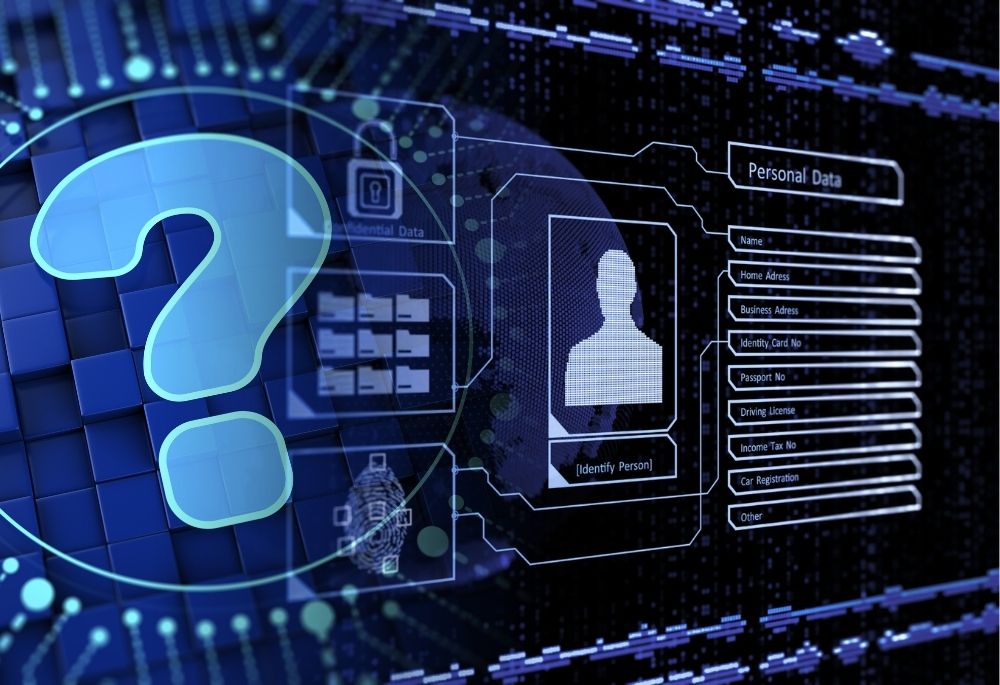
Biometric data is permanent. A password can be reset. A face cannot. If a facial recognition database is breached or misused, the affected individuals cannot simply issue themselves a new face.
Regulation is catching up quickly. Privacy law is expanding fast almost everywhere, not just in any one country. In the United States alone, Gartner research shows 22 states have now passed consumer privacy legislation, together covering more than half the U.S. population, with another 24 states expected to follow over the next five years, and enforcement is intensifying alongside it: Gartner estimates U.S. states levied $3.425 billion in privacy-related fines in 2025, a trend it expects to keep accelerating through 2028 (Gartner). Similar momentum is building across the EU, the Middle East, and Asia-Pacific, each with its own evolving rules. For any business operating across borders, this means facial recognition deployments that were once a purely technical decision are now a compliance one as well, and one that demands a fresh compliance review in every market it touches.
Trust is fragile and unevenly distributed. Surveys consistently show that comfort with facial recognition varies sharply depending on context. People are far more accepting of the technology when it secures their banking app or speeds up an airport line than when it is used for general public surveillance with no clear purpose or oversight. Misuse, scope creep, or a single high-profile error can erode that trust quickly and is difficult to rebuild.
Accuracy is not uniform. Facial recognition systems have historically shown higher error rates for certain demographic groups, which means privacy and accuracy concerns are closely linked. A system that misidentifies people unevenly is unfair and a legal liability risk too.
The primary takeaway is that facial recognition’s strength as a security tool and its risk as a privacy intrusion come from the exact same source: it can identify people without their active participation. Businesses that want the benefit have to actively manage the risk.
A Practical Framework for Deployment
Businesses don’t have to choose a side between security and privacy. The two coexist when privacy controls are built into the system’s design and day-to-day operation from the start, rather than added after the fact. Here’s a simple framework businesses can apply.
1. Define a narrow, documented purpose. Before deploying any camera with facial recognition capability, note down exactly what problem it solves: deterring theft at entry points, verifying employee access to restricted areas, confirming customer identity for high-risk transactions. A system built for a specific purpose is easier to govern, audit, and explain than one deployed simply because the capability exists.
2. Limit the watchlist, not just the cameras. The most defensible deployments restrict matching to a specific, justified list (such as individuals with active warrants) rather than attempting to identify everyone who passes a camera. The fewer people in the comparison database, and the clearer the criteria for inclusion, the lower the privacy exposure.
3. Minimize data retention. Store facial data only as long as necessary to serve the defined purpose and delete it automatically afterward. A retention window of around 30 days, with face data stored only when there is an active match, is a reasonable benchmark. Shorter retention windows reduce both privacy risk and the damage potential of a future breach.
4. Build in transparency and consent where feasible. Post clear signage where facial recognition is in use, disclose its use in customer-facing privacy policies, and offer opt-out or alternative verification paths wherever the law or the use case allows it. Transparency is also a practical safeguard: it’s far easier to defend a program the public already knows about than one they discover after the fact.
5. Test for and monitor accuracy across demographics. Before deployment and on an ongoing basis, evaluate the system’s error rates across different skin tones, ages, and genders. Don’t rely solely on vendor-reported benchmarks; validate performance using your own data and use case.
6. Separate roles and restrict access. Not everyone who can view camera footage should be able to query the facial recognition database. Apply role-based access controls, log every search, and require a documented reason for each one.
7. Build human review into every match. A facial recognition result should be treated as a lead, not a verdict. Require a trained person to confirm any match before it triggers an action like a denial of access, an arrest referral, or an account lock.
8. Map your regulatory obligations before you map your cameras. Biometric privacy laws differ meaningfully by state and country, covering everything from consent requirements to breach notification timelines. Given how much of the world is now covered by modern privacy regulation, this step has gone from optional due diligence to a baseline requirement.
Getting the Balance Right
Facial recognition in video surveillance isn’t inherently a privacy threat or a security solution; it’s a capability, and the outcome depends entirely on how a business chooses to govern it. The organizations that get the most value out of the technology, and the least backlash, are the ones that treat privacy safeguards as a core part of the system’s design rather than a compliance checkbox added at the end.
If your business is evaluating facial recognition for security, access control, or identity verification, the deployment decisions you make now will shape both your risk exposure and your customers’ trust for years to come. Talk to our identity management team about building a facial recognition program that’s secure by design and privacy-respecting by default.