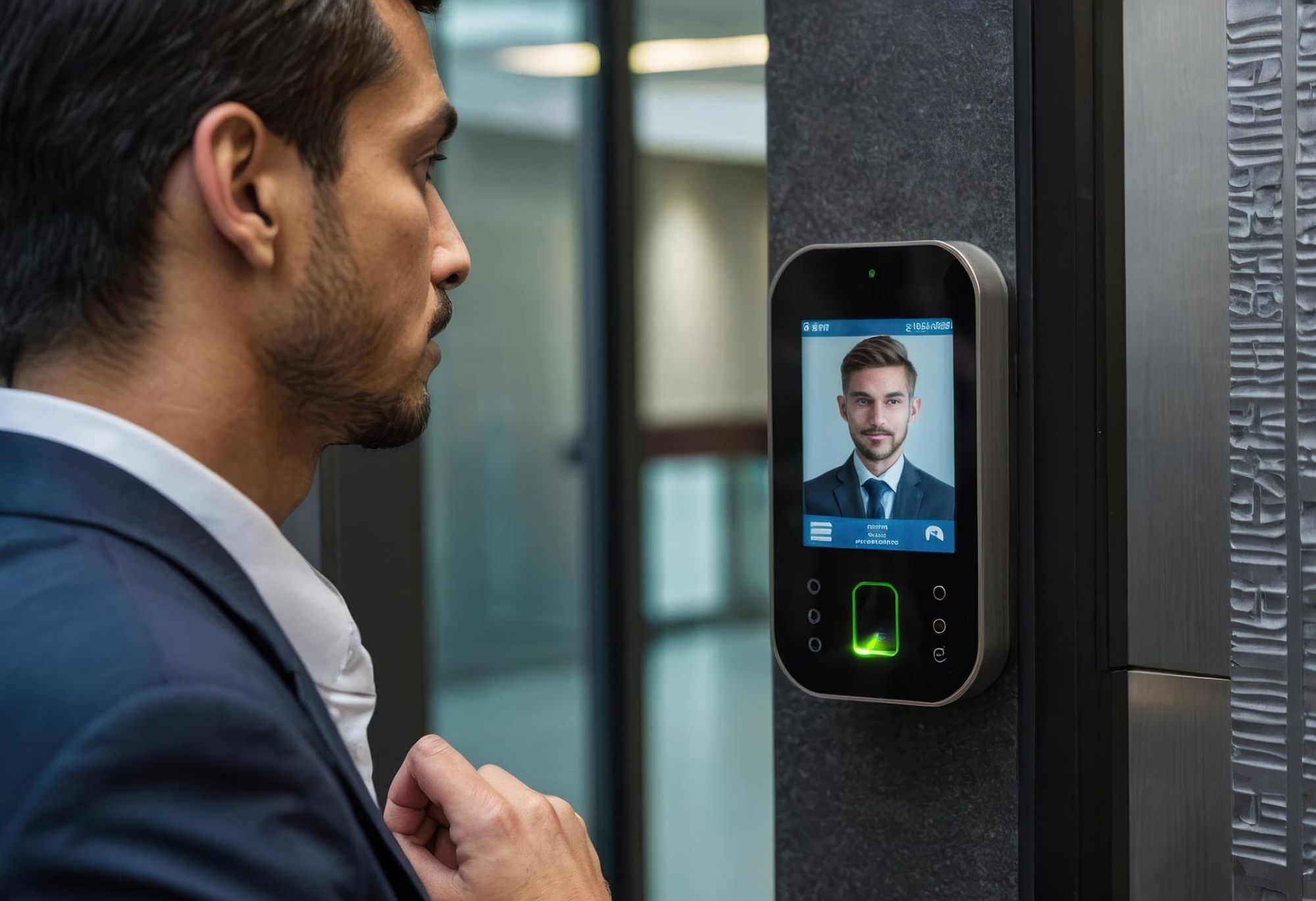
Many a time we use the terms ‘facial recognition’ and ‘facial authentication’ interchangeably. However, there is a fundamental difference between the two.
Breaking them down
Facial recognition is run by a software-based application that detects facial contours and features. The system first analyses and then checks whether the facial dimensions are matching a result in an existing database.
Facial authentication, on the other hand, uses biological characteristics to determine whether a face is authentic or not, before giving access. To elaborate the user’s self-image is converted to a 3D map by the facial authentication system. After this, the facial map is compared to a biometric template and is declared a success only when a proper match is attained.
Facial recognition uses 30 facial points and the T zone of the human face to ensure a perfect match. However, the camera quality, lighting and the distance from the camera can tamper with the accuracy of the result.
Biometrics are body measures and calculations which are unique to every human, like DNA. Therefore, a biometrics-oriented system like facial authentication, which is entirely based on concrete calculations as opposed to patterns, can hardly fail.
Application
For large data verification, facial recognition can be used. For example, during a public gathering, like a match or a parade, the law and order body can use facial recognition technology to scan the crowd. It may work in identifying perpetrators (if any).
Facial recognition is also used in advertising, finding missing persons. A social media platform like Facebook uses facial recognition to identify members in a picture.
One might have to go through a facial authentication system while performing a high-risk transaction.
Businesses are also looking for ways to implement facial authentication as opposed to recognition to identify their new online customers.
Which is better?
Facial authentication, hands down, works better in detecting frauds because of its advanced technology. However, any type of database that deals in human identity face the fear of being compromised if not safeguarded with the latest security methods available.
Apart from multiple-factors authentication, Apple’s FaceID, Google Android, Windows 10 PCs with cameras encrypts the data on a chip. Therefore, even if the devices get stolen, a hacker cannot gain access to the user’s data.
Match-on-device facial authentication is the best approach to ensuring data security.
Both businesses and consumers can make use of this technology to offer and experiences secure access. Soon websites will also start implementing facial authentication to allow customers. It is more secure than login credentials such as passwords which can easily fall into the hands of hackers.