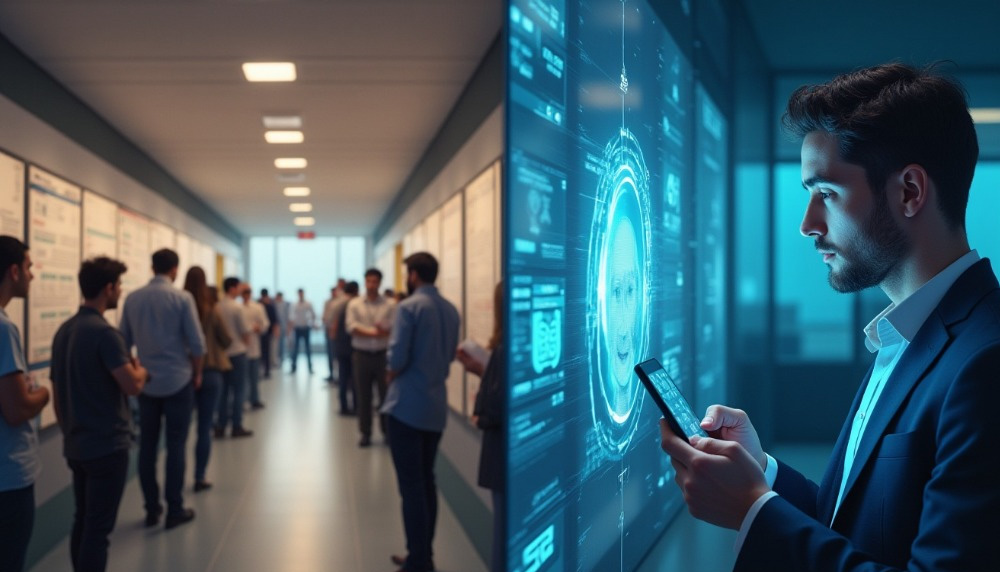
In an era where digital breaches make headlines daily and cyberattacks grow increasingly sophisticated, the question is no longer if traditional authentication will fail us, but when. As technologies like Cloud, AI, etc. grow, so do the security threats, loose ends, and vulnerable connections. Enterprises need upgraded and more reliable ways to protect data, resources, people, and businesses. When the threats loom large, what is the best way to verify the identity of a user, device, or system? How can we ensure they are who they claim to be before granting them access to resources?
Authenticating a human is usually based on three main factors: something you know (like a password or OTP), something you have (like a smart card or access card), and something you are (biometrics like fingerprints or facial scans). Each of these can be of various kinds which are generally combined in several possible ways to create an authentication system that is fast, reliable, affordable, and appropriate for a context.
Research suggests that biometrics offer superior security compared to passwords, time-bound OTPs, or access cards. We might forget a password or lose an identity card. However, who we are, doesn’t change. (Philosophers can challenge me!)
Types of Biometric Identity
A person can be authenticated from their physiological biometrics – body traits one is born with – including fingerprints, facial structure, retina, iris, and vein patterns. However, with deepfake technologies advancing rapidly, just like identity cards, even facial structures can’t be relied on in isolation.
Behavioural biometrics capture patterns you develop, like talking style, keystroke rhythm, or walking style. These liveness checks are more reliable and require live video transmissions, making them harder to spoof. The combination of both physiological and behavioural biometrics creates a robust, multi-layered authentication approach that significantly raises the bar for would-be attackers.
What is the most reliable authentication?
A common question is – why can’t we use the most trustable authentication? Why are passwords and OTPs still in use?
Biometrics are fast, secure, and reliable. However, they require sensors and biometric readers. Once biometric data is stolen, it cannot be changed like passwords – you can’t simply get a new fingerprint. Some users are wary of allowing others to store their biometrics due to privacy concerns and potential misuse. The extra hardware, online access, and specialized software required for biometric authentication also increase costs.
Despite the high upfront costs, biometric systems also need continuous upgrades to tackle evolving deepfake threats and emerging spoofing techniques. For broad compatibility and ease of management, passwords are still in use, especially when they need to be reset and authorizations need to be changed frequently. The key is finding the right balance between security, usability, and cost for each specific use case.
Unlocking Broader Scenarios with Biometrics
Biometrics merge the reliability of physical traits with digital efficiency, opening doors to versatile, tamper-proof solutions. Financial firms now onboard clients remotely using face scans matched to ID photos, slashing error rates dramatically. Travel hubs implement eye-based entry for swift crowd processing, and privacy-focused systems let users prove details selectively in challenging setups without oversharing.
| Scenario | Physical Approach | Digital Approach | Biometrics Boost |
|---|---|---|---|
| International Entry | Paper documents | Electronic visas | Instant trait matching |
| Account Setup | Branch visits | Code confirmations | Photo verification + anti-spoof |
| Remote Health Consults | In-clinic checks | Secure portals | Voice pattern recognition |
| Office Entry | Keycards | App tokens | Movement-based monitoring |
This blend extends secure access everywhere, amplifying opportunities for identity service providers in dynamic sectors.
Conclusion: The Path Forward
The shift from passwords to biometrics isn’t about completely replacing one with the other – it’s about building smarter, layered authentication systems that leverage the strengths of each method. While biometrics offer unparalleled security through inherent uniqueness, the future lies in multi-factor authentication that combines “what you know,” “what you have,” and “who you are.”
For businesses evaluating authentication solutions, the decision should be driven by use case requirements, risk tolerance, and user experience considerations. High-security scenarios like financial transactions and border control benefit immensely from biometric integration, while everyday logins may still rely on traditional methods supplemented by periodic biometric verification.
As identity service providers like TrueID continue to innovate in this space, the goal remains clear: create seamless, secure authentication experiences that protect users without creating friction. At this intersection of security, scale, and user experience, TrueID brings deep, hands-on expertise in designing and deploying biometric-led identity systems that are both resilient and practical. From multimodal biometrics and advanced liveness detection to secure digital onboarding, identity verification, and large-scale authentication platforms, TrueID works closely with clients to architect solutions aligned to real-world risk profiles, regulatory requirements, and operational realities.
Ultimately, authentication decisions must be driven by business risk, operational context, and user experience, and not by technology in isolation. The technology is here – now it’s about implementing it intelligently to build trust in our increasingly digital world.