Big data refers to extremely large data sets that may be analysed computationally to reveal patterns, trends, and associations, especially relating to human behaviour and interactions. Big data is used in many areas of application today and contains sensitive information that needs to be secured. There are serious risks involved if this data is hacked or accessed by unauthorized parties.
Biometrics offers a powerful way of securing big data. Through the use of biometric applications, big data can be made more secure. It can be ensured that only those who need access to the data can get it, thus preventing unauthorized access.
Use of biometrics to secure big data
Computing technology is being used today in almost every application. This has led to the increase in data stored by the government as well as by other organizations. The large volumes of data contain information related to citizens and users. Some of this information is sensitive and if it gets into the wrong hands it can cause problems.
There is a risk of hackers and cyber criminals getting their hands on this data. To prevent this, biometrics can be of help. The use of biometrics ensures that only the person who is entitled to access big data would get access to it.
Let’s look at the common ways in which biometrics can be used to secure big data.
Fingerprint scan
The fingerprint of each individual is distinct. Even similar twins will not have the same fingerprints. This makes fingerprints a unique way to identify a person. A fingerprint scanning device can be used to capture the fingerprint of a user. It can then be compared to a database.
This can be useful to authenticate a user. There are certain risks to this method like hackers using photos of fingerprint or create impressions of the fingerprint. When fingerprint scanning is used, the best option is to use another authentication method with it.
Iris scanning
There is a chance of fingerprints being tampered, but Iris cannot be tampered as it is the only internal organ inside the body that is visible outside. The iris in the retina is unique to each individual. An Iris scanner can be used to capture image of a person’s iris and store it in a database.
The scanner can then be used to scan the user’s retina. The iris recognition technology would compare the user’s retina scan with that in the database. This is a reliable and effective way to scan biometrics and use it to provide access to big data.
Facial Recognition
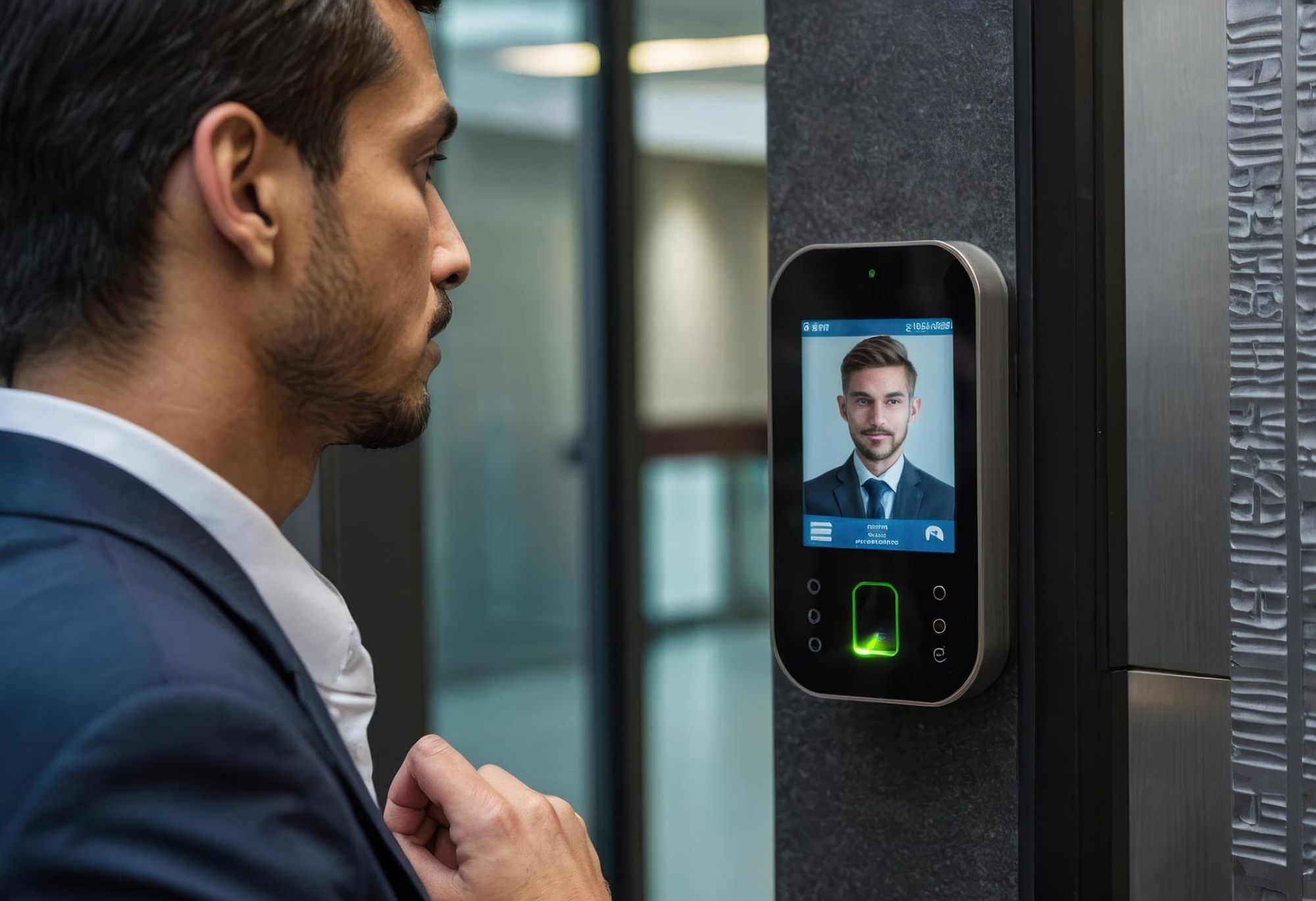
This works by capturing the facial features and authenticating them every time the user logs in to the system. This feature is mostly popular in mobile devices.
Based on our expertise at TrueID, we recommend Multimodal biometrics as the safest measure to secure bigdata. This system is a combination of fingerprint, iris and facial recognition with a fool proof security.
Read more about TrueID Multimodal platform at www.trueid.in