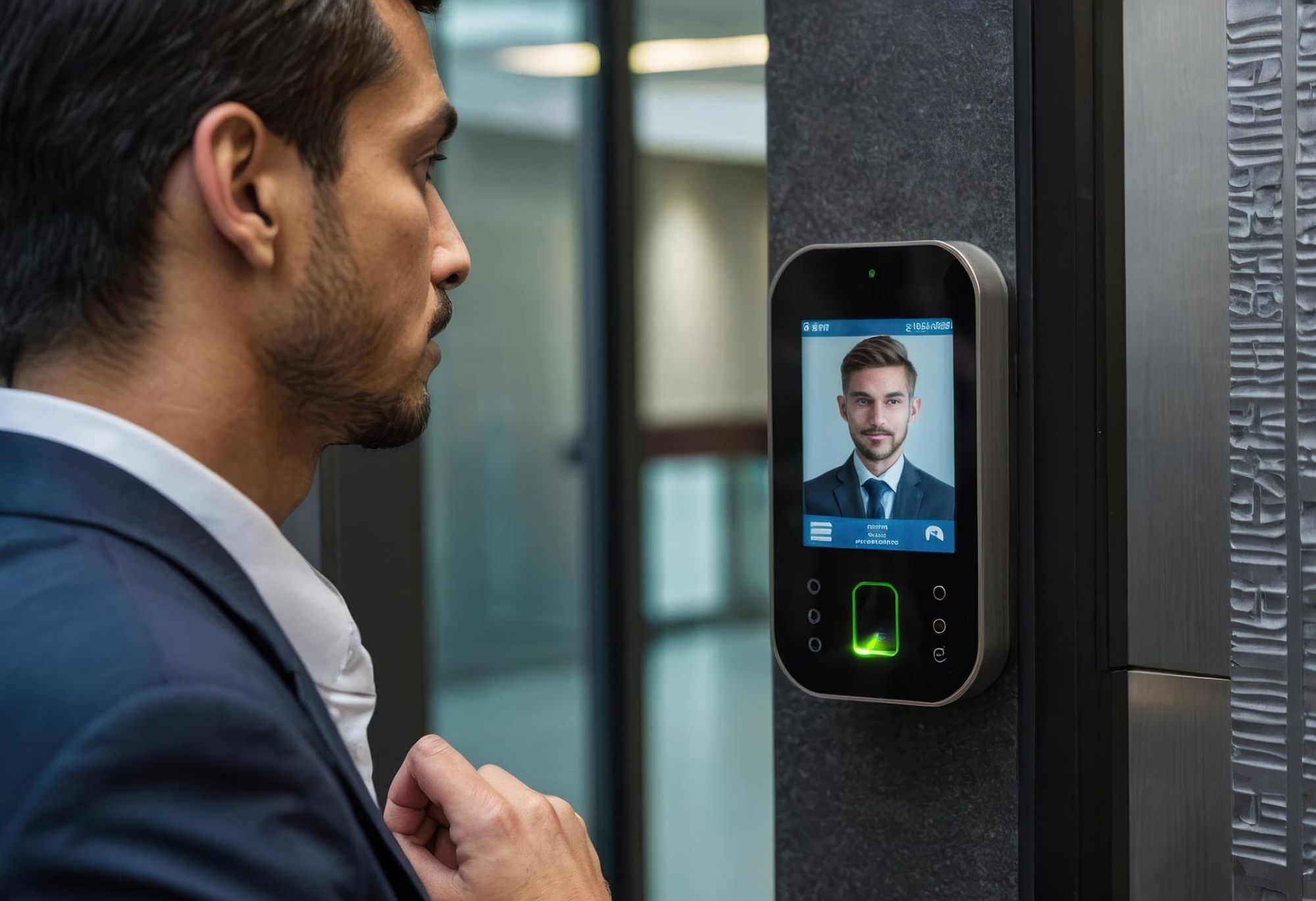
Is Contactless Fingerprinting ready for mainstream adoption?
In a state-funded report, contactless fingerprinting technology (CFP) was described as an effort to collect and add fingerprints to those collected through the wet-ink process. After that in a “touchless” scan, verify claimed identity and, more challenging, identify their owners without further information. The third-generation contactless fingerprint technology involves optics-based light, reflected from the tops of fingerprints on a plate as an alternative to wet-ink.
Recent Findings
The prevailing national ID registration and verification model might be completely reconfigured with the use of contactless fingerprint capture technology, especially when used with mobile devices. In order to implement contact-based fingerprint biometrics, an entire demographic of sophisticated acquisition equipment would gradually be replaced. Only software and smartphones will be needed to replace them, and the smart devices will also function as facial capture cameras.
The NIST also verified its compatibility with fingerprints obtained via touch fingerprint scanners, supporting recommendations issued by the organization this past June.
As opposed to a specific touch-based device, fingerprint photos need to be taken from a variety of angles, necessitating accurate scale correction in the software.
Strides as a result of technological advancements
The technological advancements are rapidly maturing, as a result, while utilizing numerous fingertips, contactless fingerprinting has attained excellent sensitivity and accuracy comparable to contact-based biometric devices. Early in 2020, a preliminary study carried out by the National Institute of Standards and Technology (NIST) of the United States confirmed this.
Before the pandemic banks and other certain applications for digital know your customer (KYC) and remote onboarding were quickly adopting contactless fingerprint technologies. The occurrence of the global pandemic gave this processes an extra push.
Today, governmental agencies are starting to employ contactless fingerprint biometrics in place of financial institutions. Contact scanners are soon expected to be phased out in favour of contactless technologies. Another important advancement is the use of neural network (NN) based algorithms for fingerprint matching, which are more forgiving of scale and quality variations. Combining the two will greatly improve the efficacy of these extensive initiatives, making contactless capture technology a straightforward decision.
For more information on contactless fingerprints, please write to us at info@trueid.in or visit, www.trueid.in