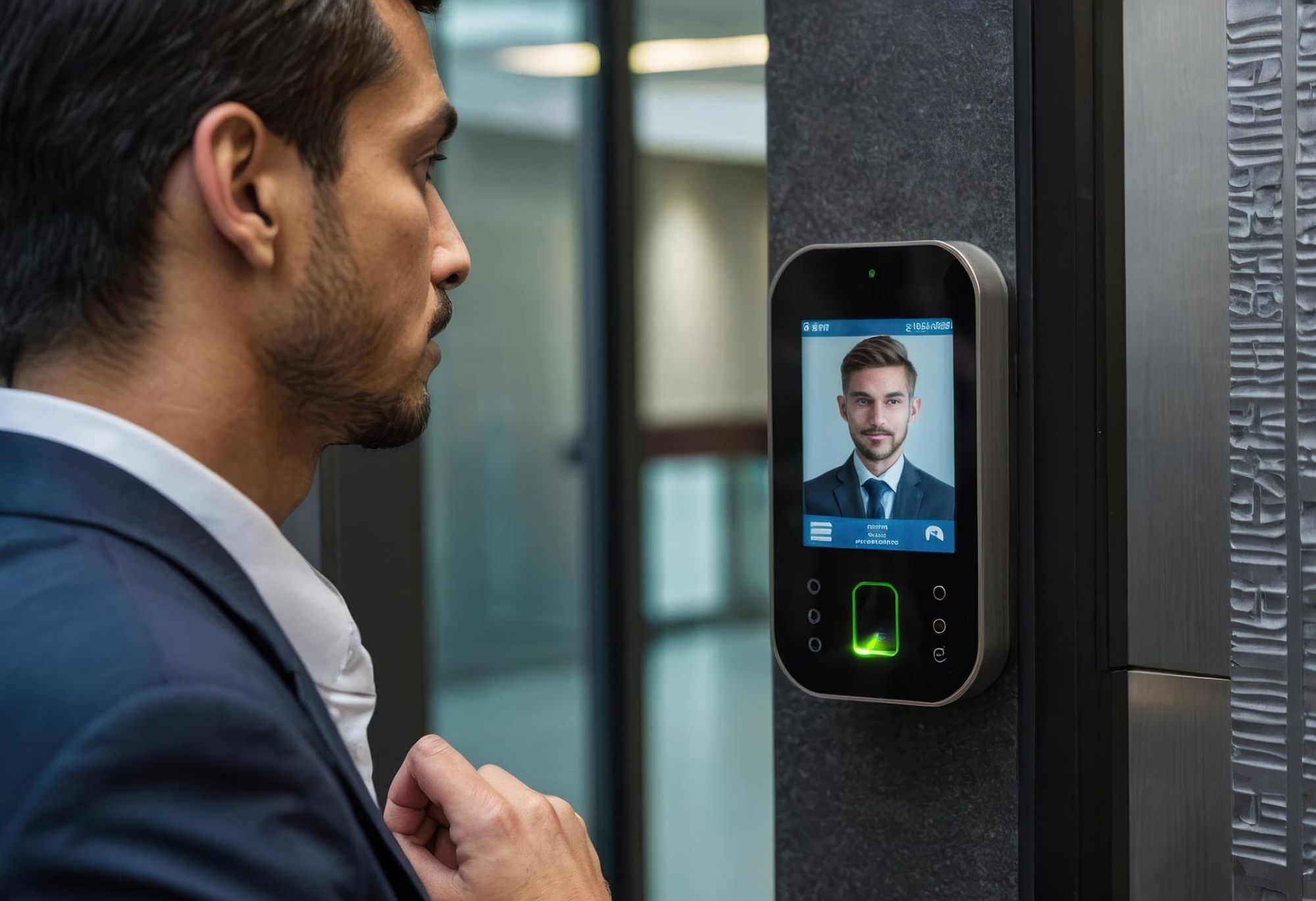
Fingerprint Recognition refers to the computerized technique of verifying a suit between two human fingerprints. Fingerprints are one of many types of biometrics used to become aware of a person and affirm their identity. Because of their distinctiveness and consistency over time, fingerprints have been used for over a century, extra currently turning into automatic (i.e. a biometric) due to development in computing capabilities.
Fingerprint identification is famous due to the fact of the inherent ease in acquisition, the several sources (ten fingers) reachable for collection, and their installed use and collections by means of regulation enforcement and immigration.
The wide variety of processes to fingerprint matching can be coarsely categorised into three families as illustrated below:
Correlation-based matching:
Two fingerprint images are superimposed and the correlation between corresponding pixels is computed for different alignments (e.g. various displacements and rotations).
Minutiae-based matching:
This is the most popular and widely used technique, being the basis of the fingerprint comparison made by fingerprint examiners. Minutiae are extracted from the two fingerprints and stored as sets of points in the two-dimensional plane. Minutiae-based matching essentially consists of finding the alignment between the template and the input minutiae sets that results in the maximum number of minutiae pairings
Pattern-based (or image-based) matching:
Pattern based algorithms compare the basic fingerprint patterns (arch, whorl, and loop) between a previously stored template and a candidate fingerprint. This requires that the images be aligned in the same orientation. To do this, the algorithm finds a central point in the fingerprint image and centres on that.
In a pattern-based algorithm, the template contains the type, size, and orientation of patterns within the aligned fingerprint image. The candidate fingerprint image is graphically compared with the template to determine the degree to which they match.
The above matching techniques help us understand how Fingerprint Recognition is used as a form of biometric to recognize identities of human beings. It includes all the stages from minutiae extraction from fingerprints to minutiae matching which generates a match score. Various standard techniques are used in the intermediate stages of processing. For more information, please write to us at info@trueid.in