Summary:
The shift to remote-first services has transformed how businesses create first impressions, replacing in-person interactions like identity checks and handshakes with digital onboarding experiences that must build the same level of trust. Technologies such as remote customer onboarding have moved from being optional conveniences to becoming the primary gateway across industries like banking, SaaS, and gig platforms. As a result, businesses now face a critical challenge: ensuring that these digital interactions are not only seamless and reliable but also secure enough to confidently verify a user’s identity, establishing trust without any physical presence.
The shift to remote-first services has fundamentally changed how businesses meet their customers for the first time. A bank branch manager once looked you in the eye, checked your passport, and shook your hand. That handshake now happens through a screen, and yet it should establish the same trust. Well-designed, reliable technologies make it happen.
The success of technologies like remote customer onboarding is evident in today’s customer and business expectations. Remote onboarding is no longer a convenience feature. It is the primary entry point for financial services, SaaS platforms, gig economy apps, and everything in between. And with that shift comes a critical question: how do you confidently verify that the person on the other end of a signup flow is who they say they are?
Here are five best practices that define the gold standard today.
1. Layer Verification Methods to Match the Risk Level
No single verification method is sufficient on its own. The most robust onboarding systems stack multiple checks — and calibrate that stack to the risk profile of the customer type.
For financial and KYC-regulated onboarding, the standard is high: a government-issued ID scan, biometric face matching, liveness detection to prevent spoofing, bank account verification, and sanctions screening. A neobank onboarding a new customer, for instance, cannot afford to skip any of these layers. A fraudulent account opened in someone else’s name can fund money laundering, trigger regulatory penalties, and erode customer trust.
For general SaaS platforms, the risk threshold is relatively lower. Email OTP and phone OTP, combined with a risk-tiered ID scan for higher-value plans, are typically proportionate and sufficient. When the contextual risk demands a higher security, an extra layer of protection is usually added.
For gig and contractor platforms, where payouts flow and tax liability is involved, the stack should include government ID verification, SSN or tax ID cross-checks, and bank account verification to ensure payouts reach the legitimate owner.
The principle is simple: the higher the value at stake — financial, legal, or reputational — the more verification layers you apply.
2. Use Biometric Verification with Liveness Detection
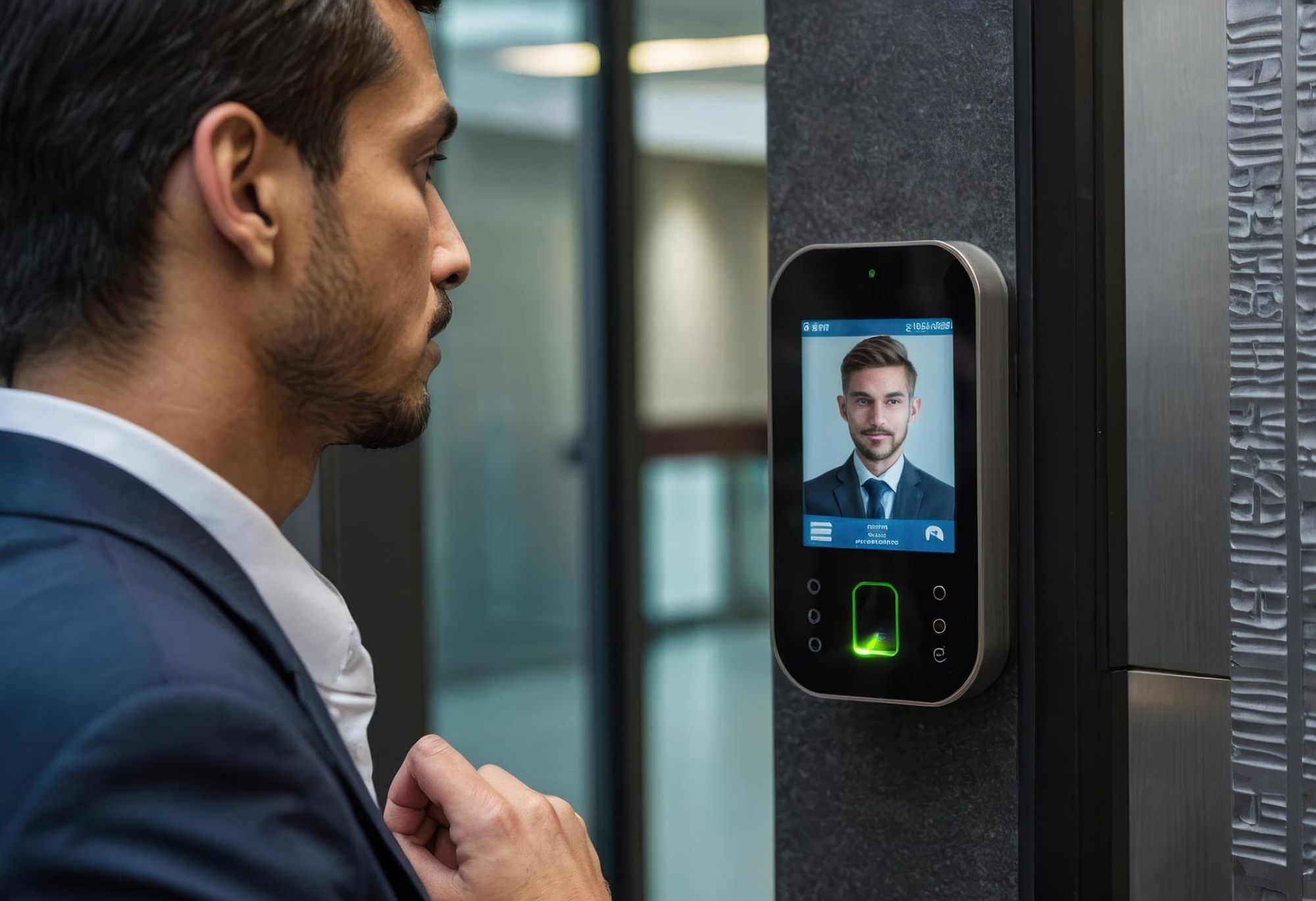
Biometric face matching, i.e. comparing a live selfie to a government ID photo, has become the cornerstone of remote identity verification. But face matching alone is not enough. Without liveness detection, a fraudster can hold up a printed photo or play a video of someone else’s face.
Liveness detection uses AI to confirm that the person in front of the camera is physically present and alive in that moment. Modern systems distinguish between a real person blinking and turning their head versus a photograph, a 3D mask, or a deepfake video.
For financial institutions, combining biometric face match with liveness detection significantly reduces the risk of synthetic identity fraud — a growing problem where fraudsters create entirely fictitious identities from stitched-together real data. The biometric layer catches what document checks alone cannot.
3. Verify Document Authenticity at the Source
Accepting a photo of an ID is not the same as verifying it. Document verification technology checks for tampered fonts, inconsistent security features, mismatched holograms, and other signs of forgery, going far beyond what a human reviewer could spot at scale.
For documents with embedded chips, NFC reading offers the highest assurance. Data is read directly from the chip’s cryptographically signed storage and compared against the printed information. If they match, the document is almost certainly genuine.
Iraq’s ongoing digital transformation is a useful example of how national ID infrastructure is evolving globally. The Iraqi National eID card, rolled out from 2016 onward and now mandatory for all official transactions since March 2024, contains an RFID chip storing biometric data including the holder’s photo and iris information. The card meets ICAO standards for machine-readable travel documents. Businesses verifying Iraqi customers remotely can use NFC-capable platforms to read directly from the chip — a far more reliable signal than an image scan alone.
This kind of digital ID infrastructure, when paired with capable verification technology, dramatically raises the bar for document fraud.
4. Cross-Check Against Authoritative Data Sources
Verifying that a document is real is not enough. Confirming that the person it describes actually exists in the real world is essential.
Effective identity verification connects document data to authoritative external records: credit bureau data, government registries, sanctions and watchlists, and adverse media databases. For regulated industries, sanctions screening against lists like OFAC, the UN Consolidated List, and local equivalents is a legal obligation.
India’s Aadhaar system illustrates what is possible when a country builds a unified, authoritative identity infrastructure at scale. Aadhaar is a 12-digit biometric identity number issued to over a billion Indian residents, backed by fingerprint and iris data. It has enabled real-time identity verification for financial services, government benefits, and SIM card registration, dramatically reducing fraud and expanding access to formal services for previously underserved populations. The system showed the world that a centralized, well-governed digital identity layer could simplify onboarding across an entire economy while simultaneously improving security. Many countries are now studying and adapting its model.
For businesses operating globally, plugging into data sources that allow real-time cross-checks — whether government databases, credit bureaus, or commercial identity registries — is what separates a verification that confirms a document from one that confirms a person.
5. Build in Continuous Monitoring, Not Just Point-in-Time Verification
Identity verification at the moment of onboarding is necessary, but not sufficient. Circumstances change. People are added to sanctions lists after they open accounts. Fraudsters who passed initial checks may exhibit suspicious behavior later. Businesses that treat onboarding as the finish line expose themselves to ongoing risk.
Continuous monitoring means regularly re-screening existing customers against updated sanctions and PEP (Politically Exposed Person) lists, flagging unusual transaction patterns, and triggering re-verification when risk indicators change. For financial services, this is a regulatory expectation under AML frameworks in most jurisdictions. For any platform, it is simply good risk hygiene.
Device intelligence and behavioral analytics are increasingly valuable here too: tracking whether a returning user is logging in from a wildly different geography, using a flagged device, or behaving in ways inconsistent with their history. These signals, combined with periodic re-verification, create a continuous assurance posture rather than a one-time gate.
The Bigger Picture
Remote onboarding is no longer a workaround — it is the norm. The businesses that get identity verification right are the ones that treat it as a layered, proportionate, and ongoing process rather than a checkbox at signup.
The global infrastructure for digital identity is maturing rapidly. From Iraq’s biometric eID rollout to India’s Aadhaar ecosystem, governments are building the foundations that make robust remote verification not just possible, but increasingly reliable. Businesses that align their onboarding stacks to these evolving standards will be better positioned to serve customers securely — wherever they are.